Moose Christmas Clipart for Seasonal Illustrations
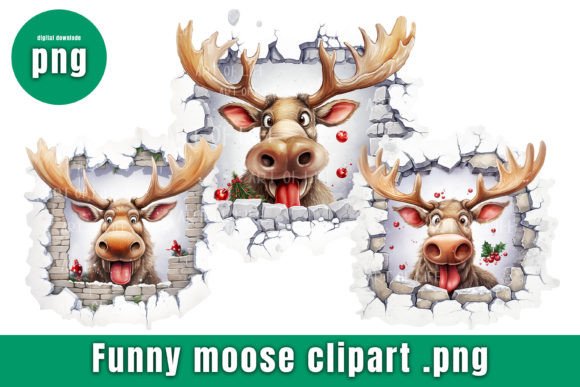
I recently received a brief from a client running a boutique handmade candle brand. They needed to launch a limited holiday collection, but their current visual identity felt a bit generic. They wanted something that screamed "cozy winter cabin" without looking like every other stock image found online. That is when I started evaluating Moose Christmas Clipart as a potential core asset for their campaign. As a designer who spends hours judging the viability of assets for real-world applications, my first impression was immediate: this set has a distinct narrative voice.
The mood created by these illustrations is undeniably rustic and inviting. Unlike sterile vector shapes or overly polished 3D renders, this clipart feels hand-drawn with character. It captures the essence of a quiet forest evening, which aligns perfectly with the emotional goal of the candle brand. When you look at the line work and the composition, it suggests warmth and authenticity. For a small business owner trying to build trust with an audience that values craftsmanship, this style of illustration bridges the gap between professional design and personal touch.
Real-World Application in Brand Identity and Packaging
In a practical sense, how does Moose Christmas Clipart perform when moved from a preview screen to actual deliverables? I tested several scenarios to see if it could hold up under the scrutiny of a commercial project. The results were promising for specific use cases. For packaging design, especially on matte paper or kraft boxes, the texture implied by the illustration adds a layer of tactile quality. It transforms a standard product label into a story element.
Imagine placing this asset on a t-shirt design or a tote bag. The visual weight is substantial enough to stand out without overwhelming the garment. It works exceptionally well as a hero graphic for a website banner or a seasonal landing page. In these large layout areas, the details of the moose and the surrounding foliage become clear, drawing the eye immediately. This is crucial for marketing visuals where you have less than three seconds to capture attention on social media platforms like Instagram or Pinterest.
Furthermore, for digital sellers creating print-on-demand products, this asset offers versatility. It can be integrated into a cohesive theme that includes matching patterns for wrapping paper or decorative accents on gift tags. The illustration supports a full branding ecosystem rather than just serving as a single isolated icon. When used correctly, it elevates the perceived value of the final product, making it feel like a curated collection rather than a random assortment of items.
Strategic Placement for Maximum Impact
However, not every placement is suitable. A critical part of my review process involves identifying where an asset should be used carefully. While Moose Christmas Clipart is robust, it is not a universal solution for every design problem. It performs best when given breathing room. If you attempt to squeeze this detailed illustration into a crowded layout or a very small size, such as a favicon or a tiny mobile notification badge, the nuances will be lost.
In minimalist branding projects, this asset might feel too busy. If a client requires a clean, corporate aesthetic with strict visual hierarchy, the organic lines of this clipart could clash with their need for precision. Similarly, using it on low-contrast designs or complex backgrounds can create readability issues. The eye needs a clear path to follow, and a dense illustration can sometimes compete with essential text elements if the contrast isn't managed meticulously.
I also advise caution when pairing this with script fonts. While the combination can look charming for a wedding invitation or a craft fair flyer, it can easily tip into a chaotic visual experience if the font weights are not balanced. The key is to let the illustration be the star while supporting typography remains simple and legible. Sans serif fonts often provide the necessary stability to ground the whimsical nature of the moose imagery, ensuring the message remains clear.
Technical Considerations for Commercial Use
Beyond aesthetics, a professional designer must scrutinize the technical specifications before approving any graphic design asset for a client. When reviewing Moose Christmas Clipart, I focused heavily on file formats and editability. Does it come as a high-resolution PNG with a transparent background? Is there an SVG or vector version available? For a Cricut project or sublimation design, having a vector source is non-negotiable if you plan to scale the image for large format printing.
I recommend testing the asset in black and white first. This helps determine if the form holds up without relying on color cues. It also allows you to check the contrast on both light and dark backgrounds. If the design relies solely on color to define its shape, it may fail in monochrome applications like embossing or foil stamping. Additionally, inspecting the transparency edges is vital; jagged pixels or halos around the moose can ruin the polish of a final mockup.
Another critical step is confirming the commercial license. Many marketplaces offer free downloads that restrict commercial use. For a client project involving product sales or advertising, you need explicit permission to use the digital product for profit. Without a proper commercial license, you risk legal complications that can cost far more than the price of the asset itself. Always verify that the terms allow for end-product resale, whether that is a sticker design, a mug, or a digital template.
Integrating into Modern Design Workflows
For those utilizing tools like Canva templates or working directly in Adobe Illustrator, the workflow efficiency matters. If the asset breaks down into layers, it opens up creative possibilities. You can recolor the moose to match a specific brand palette or isolate specific elements like pine branches to create repeating patterns. This flexibility turns a static illustration into a dynamic component of a larger design system.
When designing for editorial purposes or blog visuals, this clipart adds a human element that stock photography often lacks. It signals to the reader that the content is crafted with care. For example, using it in a header for a holiday gift guide or as a bullet point in a newsletter can break up text and increase engagement. The emotional appeal of the moose evokes feelings of nostalgia and comfort, which drives higher click-through rates during the holiday season.
Ultimately, Moose Christmas Clipart is a strong candidate for designers seeking to inject personality into seasonal campaigns. It fits naturally within the realm of modern design trends that favor authenticity over perfection. Whether you are building a brand identity for a handmade business, creating stickers for an Etsy shop, or designing marketing visuals for a local event, this asset provides a solid foundation. Just remember to respect the visual hierarchy, test your files rigorously, and ensure your licensing is in order. By doing so, you transform a simple clipart download into a professional-grade design solution that delivers real value to your clients.